Alna Meetinghouse
Text by Brett Donham
In 1790 a petition for separation was submitted to the Massachusetts legislature by farmers and yeomen in the west valley of the Sheepscot River north of Wiscasset. It was granted, Maine being part of Massachusetts at that time. The petition called for creating a new town to be called New Milford because of all the new mills along the Sheepscot River. Twenty years later the townsfolk changed the name to Alna, for the species of tree that grew in abundance along the Sheepscot. The land for the new town would be split off from what we now call Newcastle [to the east] and Dresden [to the west]. Much of the land between the Sheepscot, Eastern, and Kennebec Rivers was gently rolling and well drained soil and most of the early settlers in Alna in the late 1700’s were farmers. The new schoolhouse and meetinghouse were located in the geographic center of the new town, on the highest point of land, in the center of the best farmland. Required attendance at Sunday worship, a day-long affair, strongly suggested that the meetinghouse be located in the center of this farming community. Going to church was “going to meeting”.

Oblique view toward pulpit, showing balcony seating on both sides of the meeting room.
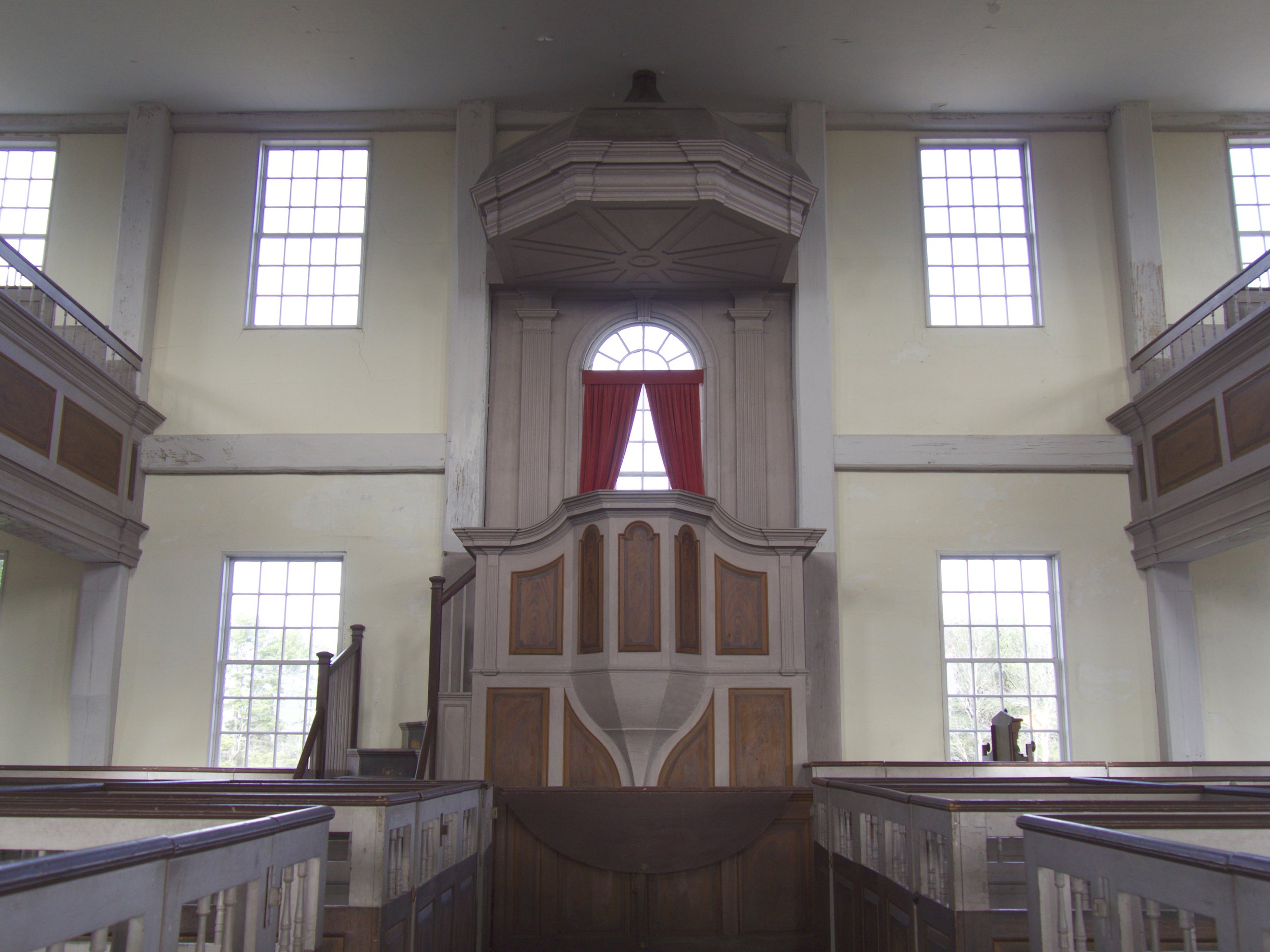
View toward the pulpit, backed by a Palladian window, and topped by a structure above that projects the speaker’s voice toward meeting attendees, regardless of where they are seated.

Faux graining appears throughout the meetinghouse, including this detail of the lower portion of the pulpit.
(Photo Credit © Steve Rosenthal)
But this was not just a farming community. It and other towns of this era were also religious communities. The Town and the Church were one and the same. The Town’s taxes paid the salary of the minister, the construction of his house, and the construction and maintenance of the meetinghouse. The meetinghouse was used for Sunday’s religious services as well as meetings for civic purposes such as deciding town salaries, road repair, alewife rights, setting the tax rate, and other business. To vote in civic meetings one had to be accepted into the church. The church managed public disciplinary problems and could remove troublesome people from town.
The story of how Alna's center of gravity shifted to Head Tide — and the church that was built there — continues on the Head Tide Church page.
Make a donation.
Historic Alna is a 501(c)(3) charitable non-profit whose mission is to support the maintenance, preservation, restoration, and use of historic sites in the Town of Alna. Your contribution will help with new paint, plaster, maintenance of original wood windows, and so much more. Please consider making a tax-deductible donation today.
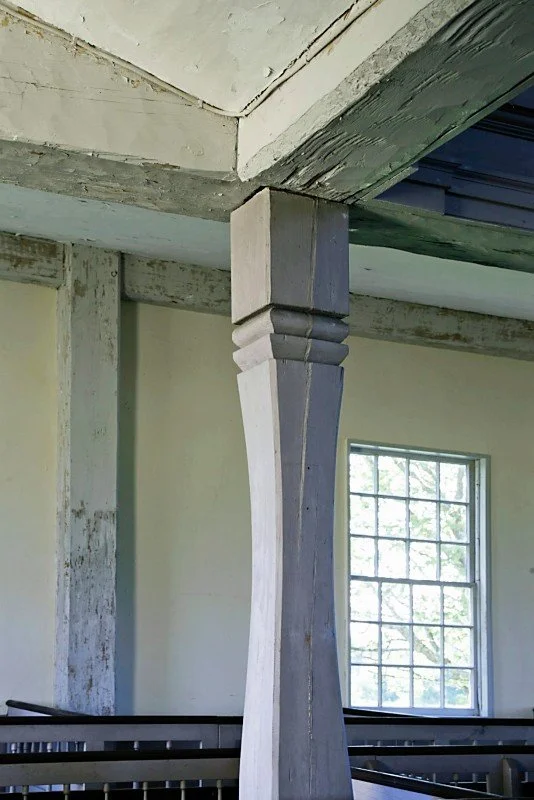
Original wooden columns stand among box pews on the first floor, and support capacious balcony spaces above.
(Photo Credit © Steve Rosenthal)